
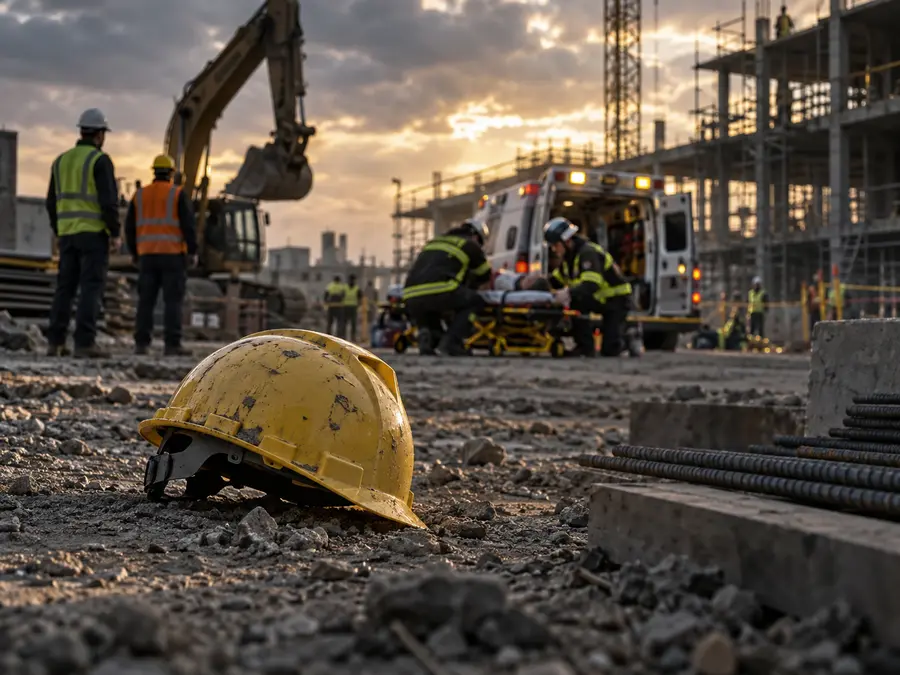
What Should I Document After a Workplace Fall?
A workplace fall can happen at floor level or from height: a wet surface, loose cord, uneven walkway, ladder, scaffold, loading dock, roof edge or other work area. For workers’ compensation, the first issue is usually whether the fall happened in the course of employment—not whether you can prove premises negligence.
Falls are evidence-sensitive because the physical condition can disappear quickly. A spill gets cleaned, merchandise moves, temporary lighting changes, a ladder is replaced and surveillance video may be overwritten.
- Photographs or video of the exact walking/working surface and surrounding area, when it is safe and lawful to obtain them.
- What caused the loss of footing or balance: liquid, debris, uneven surface, cord, opening, ladder movement, missing guardrail or another condition.
- Witness names, including coworkers, customers, contractors or delivery personnel.
- Any incident report and the time the employer learned about the fall.
- Information identifying a ladder, scaffold, forklift, lift, platform or other equipment involved.
- The first medical record describing how the fall occurred and the body parts injured.
- Any available surveillance-video information and the person or company that controls the camera system.
Do I Have to Prove Someone Was at Fault?
Workers’ compensation is generally no-fault. An employee does not ordinarily need to prove that the employer was negligent to pursue workers’ compensation benefits. That distinction matters because legacy “slip and fall” language often sounds like an ordinary premises-liability lawsuit, while a workplace fall can be covered through workers’ compensation even when no separate negligence case exists.
What Benefits Can a Workplace Fall Trigger?
- Medical treatment for the work-related injuries.
- Temporary disability when the injuries cause qualifying wage loss during recovery.
- Permanent disability if lasting impairment remains.
- Supplemental job displacement benefits in qualifying cases when permanent restrictions prevent a return to appropriate work.
- Death benefits for eligible dependents if the work-related fall is fatal.
The benefit path depends on the injuries, not on the label “slip and fall.” A fracture with a short recovery, a traumatic brain injury, a spinal injury and a shoulder tear can produce very different treatment, disability and return-to-work issues.
When Can a Separate Third-Party Claim Exist?
Two-track issue: California Labor Code section 3852 preserves an injured worker’s claim against a person other than the employer when that third party is legally responsible. The workers’ compensation and third-party claims can overlap, so they should be coordinated rather than treated as interchangeable.
- A fall on premises controlled by a property owner or business that is not the worker’s employer.
- Defective equipment supplied or maintained by an outside company.
- A general contractor, subcontractor or other entity whose conduct may create separate liability, depending on the employment and site-control facts.
- A work-related vehicle incident caused by an outside driver.
A third-party case can involve remedies that workers’ compensation does not provide, but the existence of an outside party does not automatically mean a separate lawsuit is viable. The responsible entities and relationships must be identified from the evidence.
Falls From Height Require Their Own Evidence
When a fall involves a ladder, scaffold, roof, elevated platform or construction activity, preserve more than the injury records. Identify the equipment, work task, height, tie-off or guardrail system, company responsible for the area, and any Cal/OSHA involvement. California construction fall-protection rules are task-specific rather than a single universal height rule.
When Should a Workplace Fall Claim Be Reviewed Early?
- The fall caused head, spinal, multiple fracture or other serious injury.
- Surgery, prolonged rehabilitation or permanent restrictions are being discussed.
- The employer disputes that the fall occurred at work or says the worker caused it.
- The physical condition, equipment or surveillance evidence may disappear.
- More than one company controlled the site or equipment.
- Treatment, temporary disability or the claim itself is delayed or denied.
Frequently asked questions
What if I slipped but no one else did anything wrong?
A workers’ compensation claim can still be possible because ordinary workers’ compensation does not require proof of negligence. The key question is whether the injury is work-related under California law.
What if I fell at a customer’s or third-party location while working?
The workers’ compensation claim may still be available if the injury arose in the course of employment. A separate claim against the property owner or another party may also need review depending on control of the hazard and other facts.
Should I photograph the condition?
If it can be done safely and lawfully, early photographs can be useful because workplace conditions change. Do not delay medical care or put yourself at risk to collect evidence.
Does a Cal/OSHA violation automatically increase workers’ compensation benefits?
No. Safety enforcement and workers’ compensation are related but distinct systems. A safety violation can be important evidence, but specialized remedies such as a serious-and-willful misconduct claim have separate legal requirements.
Related legal services
For related guidance, see specific injury and denied claims.