
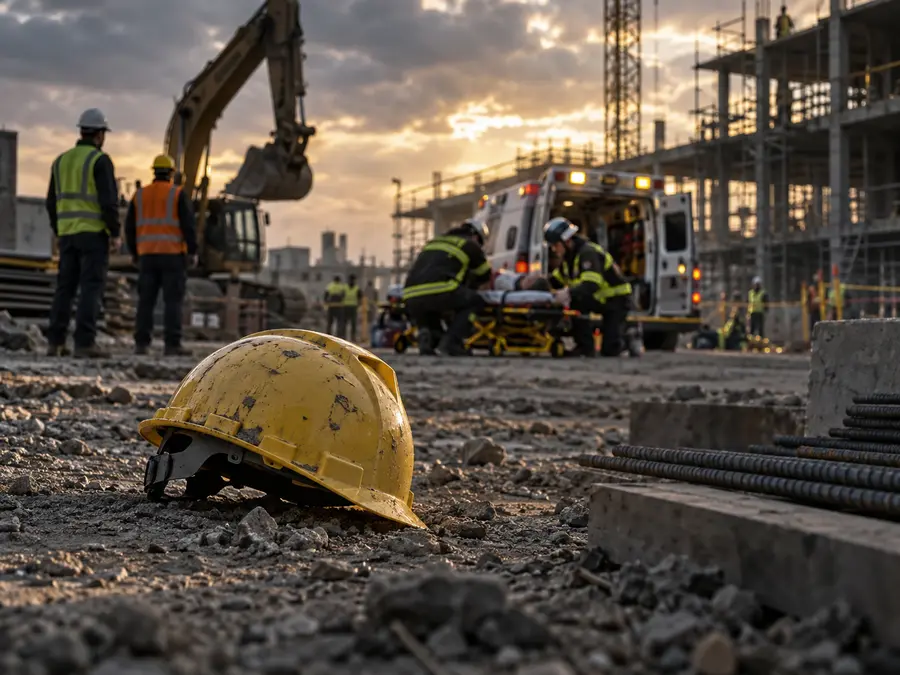
What Should I Do After a Construction Site Injury?
Construction injuries can involve falls, trenches, scaffolds, electrical hazards, moving equipment, falling materials and toxic exposure. A worker does not have to prove employer negligence to pursue California workers’ compensation, but identifying the accident mechanism can still matter for medical causation, Cal/OSHA evidence, serious-and-willful issues and possible third-party claims.
Practical steps include:
- Call 911 or obtain urgent medical treatment for a serious injury.
- Tell the supervisor or employer the injury happened at work.
- Request the DWC-1 claim form and keep a copy after it is submitted.
- Record the exact location, task and equipment involved.
- Identify witnesses and the companies employing them.
- Preserve photographs or video only when it is safe and lawful to do so.
- Keep work-status notes, restrictions, medical records and insurer correspondence.
- Avoid signing a broad civil release before understanding whether a third-party claim exists.
Which Construction Hazards Commonly Cause Workers’ Compensation Claims?
Construction claims frequently arise from:
Falls From Heights
Roof edges, ladders, scaffolds, openings and elevated work surfaces can produce brain, spinal, orthopedic and fatal injuries. California’s construction safety rules include fall-protection requirements, including section 1670 for specified elevated work.
Trench and Excavation Accidents
Cave-ins, hazardous atmospheres, falling material and access problems can cause crush injuries, asphyxiation and trauma. Title 8 sections 1541 and 1541.1 contain detailed excavation and protective-system requirements.
Struck-By and Caught-In/Between Events
Workers may be injured by falling loads, moving vehicles, cranes, construction materials or equipment. These cases can involve multiple contractors and equipment owners.
Electrical Injuries and Burns
Temporary power, wiring, energized equipment and contact with electrical systems can cause burns, neurologic injury or fatal trauma.
Machinery and Tool Injuries
Saws, compactors, lifts, earthmoving equipment and other powered tools can cause crush injuries, amputations and lacerations.
Exposure and Cumulative Injuries
Dust, chemicals, noise, repetitive lifting and vibration may cause occupational disease, hearing loss or cumulative trauma rather than a single-incident injury.
Do I Have to Prove a Safety Violation to Get Workers’ Compensation?
No. California workers’ compensation generally does not require the injured worker to prove that the employer violated a safety rule or caused the accident. Safety evidence can still matter for understanding how the injury occurred and for separate legal issues.
A Cal/OSHA violation does not automatically create an ordinary negligence lawsuit against the employer. Workers’ compensation is usually the primary remedy against the employer for an industrial injury. Different rules can apply when a third party is responsible or when statutory serious-and-willful misconduct requirements are met.
What Is a Serious and Willful Misconduct Claim?
Labor Code section 4553 provides for a 50% increase in workers’ compensation when the injury results from qualifying serious and willful misconduct by the employer or specified managing personnel. This is not the same as ordinary negligence or a routine safety mistake. It is a separate statutory issue that requires case-specific proof.
Because the standard is demanding, not every missing guardrail, PPE issue or unsafe instruction automatically qualifies as serious and willful misconduct.
Can I Have a Third-Party Claim After a Construction Accident?
Yes, in some construction accidents. Labor Code section 3852 preserves an employee’s claim against a person or company other than the employer. Multi-employer construction sites make this question especially important.
Potential third parties may include:
- another contractor or subcontractor;
- a negligent driver;
- an equipment manufacturer or rental company;
- a property owner in circumstances creating separate liability;
- a maintenance or service company.
The workers’ compensation carrier may have reimbursement or lien rights, so the two claims should be evaluated together rather than in isolation.
What Evidence Matters on a Multi-Employer Construction Site?
A construction claim can become difficult when nobody preserves who controlled the work or equipment. Useful information may include:
- employer and subcontractor names;
- general contractor information;
- the worker’s task at the time of injury;
- equipment owner or rental company;
- photographs of the area, guardrails, trench, scaffold or machine;
- witness names and employer affiliations;
- incident and safety reports that the worker lawfully receives;
- medical records and work restrictions;
- police or fire records if emergency agencies responded;
- Cal/OSHA inspection or citation information if an investigation occurred.
What Benefits May Be Available?
Construction workers may qualify for medical care, temporary disability, permanent disability and, where requirements are met, supplemental job displacement benefits. Fatal construction injuries can create death-benefit rights for qualifying dependents.
A worker can qualify for benefits even if the accident was partly the worker’s own fault. Workers’ compensation benefits also do not include pain and suffering.
Why Construction Workers Call Hussain & Gutierrez
Construction claims can involve several legal tracks at once: workers’ compensation benefits, medical disputes, permanent restrictions, subcontractor evidence and possible third-party liability. The firm can evaluate those issues together rather than treating the case as a generic accident claim.
Frequently asked questions
Can I get workers’ compensation if I caused the construction accident?
Often yes. California workers’ compensation is generally no-fault, subject to statutory exceptions and defenses.
Does a Cal/OSHA citation prove my workers’ compensation case?
No. A citation may be relevant evidence, but workers’ compensation coverage does not depend on proving a citation, and a citation does not automatically establish every disputed issue in the claim.
Can I sue a subcontractor that caused my injury?
Potentially, if that subcontractor is legally a third party rather than the injured worker’s employer and the facts support liability. Labor Code section 3852 preserves third-party rights.
What if I was injured by a defective machine?
You may have workers’ compensation benefits and a potential third-party product or maintenance issue. Preserve the machine identity, manufacturer, model and any available incident information.
What if I cannot return to construction work?
Permanent restrictions can affect permanent disability, modified work and possible supplemental job displacement benefits. Link to the Permanent Disability and Return to Work pages.