
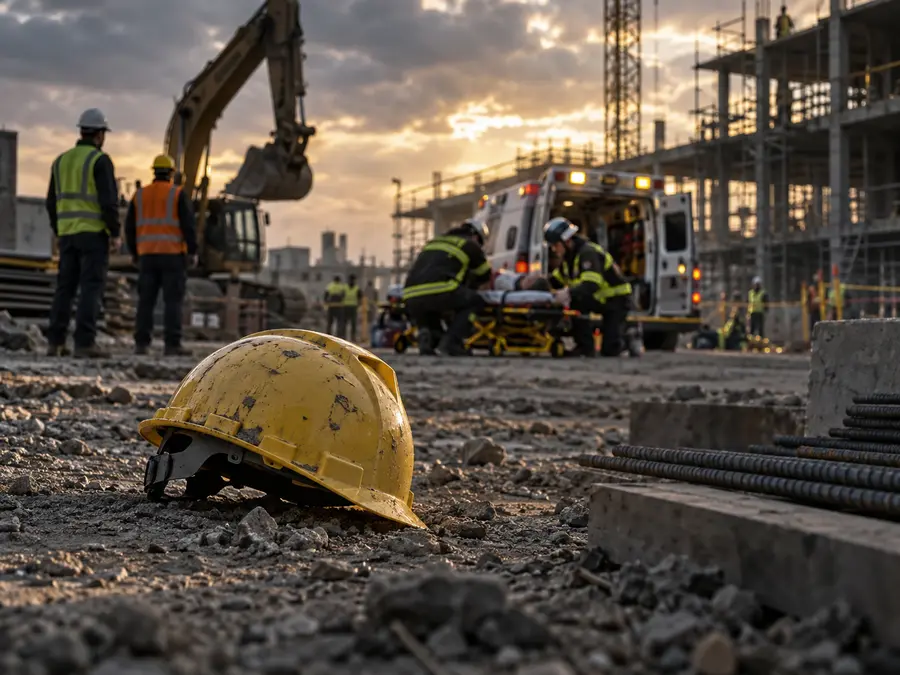
After a Head Impact at Work, Medical Safety Comes First
If the injury is an emergency, California DWC instructs workers to call 911 or go to an emergency room and tell medical staff that the injury is job-related.
A brain-injury claim becomes clearer when the accident record, medical record and functional/work record tell the same accurate story.Three records should line up
CDC guidance also notes that some mild traumatic brain injury or concussion symptoms may appear immediately while others may not be noticed for hours or days. That makes follow-up documentation important when symptoms change after the initial incident.
A worker should report the event to the employer as soon as possible and request the DWC-1 claim form. If symptoms change after the initial report, tell the treating provider and claims administrator rather than assuming the original report must remain frozen in time.
Why Brain-Injury Claims Can Become Documentation-Heavy
A visible head impact may be easy to describe. The harder part can be documenting how the injury affects thinking, concentration, balance, sleep, headaches, memory, behavior, stamina or the ability to perform job tasks.
The legal claim becomes clearer when three records line up:
Some concussion and brain-injury symptoms can evolve after the initial event.Track changes over time
- The incident record
Document what struck the head or caused the rapid movement, where the worker was, what task was being performed, witnesses and any safety or incident report.
- The medical record
Preserve emergency, urgent-care, primary-treatment, neurology, rehabilitation or other relevant records. Follow the treating physician's instructions and make sure the history accurately identifies the event as work-related.
- The functional/work record
Keep work-status notes, restrictions, missed-work dates, modified-duty offers and examples of job tasks the worker can no longer perform safely or consistently.
This is more useful than relying on a single phrase such as "head injury" without showing how the condition developed and affected work.
Can a Concussion Be a Workers' Compensation Injury?
Yes, when it is caused by employment and satisfies the workers' compensation requirements. A concussion or other TBI can be a specific injury when it results from one incident such as a fall, collision, falling object or machine event.
The seriousness of a legal claim is not determined by the label alone. Medical treatment, work restrictions, duration of symptoms, permanent impairment, ability to return to work and future medical needs can all matter.
For the one-incident injury framework, see our Specific Injury Lawyer page.
What Medical Disputes Commonly Matter in a TBI Claim?
California DWC explains that QME reports are used to resolve medical disputes and determine eligibility for workers' compensation benefits. The specialty selected for a medical-legal evaluation can therefore matter when the disputed condition is neurological, psychiatric, orthopedic or involves more than one body system.
If you receive a QME panel or notice, review our Qualified Medical Evaluations page.
How Do Work Restrictions Affect Temporary Disability?
Temporary disability benefits are tied to wage loss caused by the injury and the worker's medical ability to perform the usual job.
A brain-injury claim can become difficult when the medical record identifies symptoms but does not clearly state what work the employee can safely do. Employers and claims administrators need usable work-status information to evaluate full duty, modified duty and temporary disability.
Keep every work-status note. If the treating physician changes restrictions, preserve the new note and document when it was provided to the employer.
For wage-loss rules, see our Temporary Disability Benefits page.
What If Symptoms Continue After the Condition Stabilizes?
Permanent disability is a separate question from the initial diagnosis. California DWC explains that permanent disability benefits may be payable when lasting disability from a work injury affects the ability to earn a living, even if the worker can return to some work.
A physician or QME evaluates impairment, which is then used in California's permanent-disability rating process along with factors such as age and occupation.
If lasting cognitive, physical or other impairment remains, see our Permanent Disability page.
Future Medical Care Can Matter in a Serious TBI Claim
California workers' compensation medical care is intended to provide treatment reasonably required to cure or relieve the effects of the work injury, subject to the Medical Treatment Utilization Schedule and utilization-review process.
For a serious brain injury, the future-care question may be as important as current bills. Before resolving future medical rights in a settlement, understand what treatment, medication, therapy, follow-up or assistive care is being recommended and what the settlement would change.
For that issue, see our Future Medical Buyout page.
Could There Also Be a Third-Party Claim?
Potentially. DWC explains that a separate claim or lawsuit may be available when a work injury was caused by someone other than the employer.
For a brain injury, that can arise after a work-related vehicle collision, defective product or equipment, or an incident involving another company. Workers' compensation usually does not pay pain-and-suffering damages, while a third-party civil claim operates under different rules.
The two matters can interact, so they should be evaluated together rather than independently settling one without understanding the effect on the other.
What to Bring to a Brain-Injury Consultation
Useful records can include:
- the DWC-1 claim form
- accident or incident reports
- emergency and hospital records
- imaging and specialist reports, if any
- medication and therapy records
- work-status notes
- wage records
- modified-duty offers
- QME or AME notices and reports
- denial or delay letters; and
- a concise symptom and function timeline showing meaningful changes over time.
Van Nuys Workers' Compensation Resource
The DWC Van Nuys district office is at 6150 Van Nuys Boulevard, Suite 105. Its Information & Assistance Unit helps unrepresented injured workers with workers' compensation procedures. DWC's Information Services Center is 1-800-736-7401.
Hussain & Gutierrez is located at 6316 Van Nuys Boulevard.
Frequently asked questions
Can concussion symptoms appear after the accident?
Yes. CDC guidance states that some mild TBI or concussion symptoms may appear right away while others may not be noticed for hours or days. Seek appropriate medical care and document changes rather than assuming the absence of immediate symptoms ends the issue.
Do I need a CT scan or MRI to have a workers' compensation claim?
The legal question is whether a work injury is established by the medical and factual evidence. Imaging may be part of the medical evaluation when appropriate, but no single test should be treated as the only evidence in every brain-injury claim.
What if my employer says I can return to work but my doctor gave restrictions?
The written medical restrictions matter. If the employer offers work that does not fit the treating physician's restrictions, preserve the offer and the medical note and get advice about how to respond.
Can I receive workers' compensation if I was partly at fault for the accident?
Ordinary fault usually is not the central test in California workers' compensation. Benefits are generally no-fault if the injury arose out of and occurred in the course of employment, subject to statutory defenses and exceptions.
Is there an average TBI workers' compensation settlement?
No responsible universal average can predict an individual outcome. The claim may involve treatment, wage loss, permanent disability, future medical care, return-to-work issues and disputed medical causation. The settlement structure also matters.