
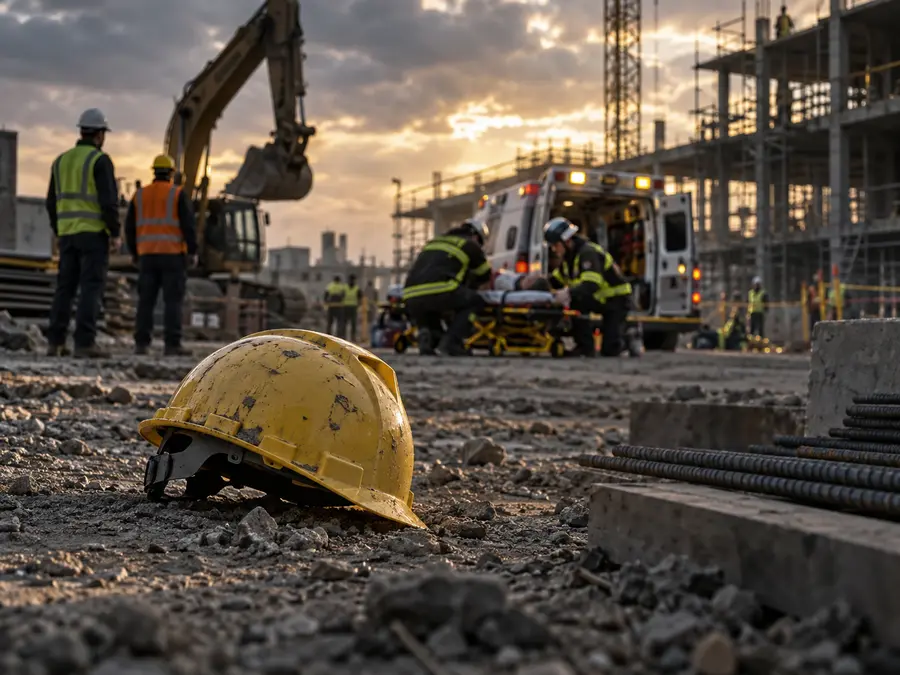
This Page Has a Different Job From the Catastrophic Injury and Death Benefits Pages
The Catastrophic Injury page focuses on long-term medical care, disability and future claim planning for a worker who survives a severe injury. The Death Benefits page focuses on dependency, burial expenses and statutory benefits after a work-related death. This page is the incident-triage bridge between them: what to preserve, which legal tracks may exist and where the surviving worker or family should go next.
That distinction matters for search quality and for real users. A family dealing with an industrial fatality needs a different first-hour checklist from a worker evaluating a permanent disability rating months later.
What Should Happen First After a Catastrophic Workplace Accident?
- Get emergency medical care and follow hospital or treating-physician instructions. Do not delay urgent care to collect evidence.
- Report the work injury or fatal incident to the employer and identify the workers’ compensation carrier or claims administrator when known.
- Preserve the DWC-1 claim form, claim number, incident report and every written communication about the accident.
- Identify the exact worksite, employer entity, supervisor, contractors, equipment owners and other companies present. On multi-employer jobsites, the company names can matter as much as witness names.
- Preserve photographs, video, equipment identifiers, vehicle information and witness details that can disappear when a scene is cleaned, repaired or returned to service.
- If the worker has died, collect the original injury date, date of death, death certificate, existing claim records and documents showing dependency or financial support.
- Before signing a settlement, release or broad authorization, understand whether the document affects workers’ compensation, future medical care, death benefits or a separate third-party claim.
One Incident Can Create More Than One Legal Track
Key distinction: California workers’ compensation is generally a no-fault benefit system. A catastrophic accident does not become a larger workers’ compensation claim simply because someone was negligent. However, a separate civil claim may exist if a legally responsible third party – someone other than the employer – caused the injury or death.
| Track | What it addresses |
|---|---|
| Workers’ compensation | Medical treatment, temporary disability, permanent disability, job-displacement benefits and other statutory workers’ compensation rights. |
| Workers’ compensation death benefits | Statutory benefits for qualifying dependents and reasonable burial expenses when a work-related injury or illness causes death. |
| Third-party claim | Potential civil liability of a separate driver, contractor, equipment manufacturer, property entity or other legally responsible party, depending on the facts. |
| Cal/OSHA / safety investigation | Workplace safety enforcement and evidence. A safety citation is not itself a workers’ compensation award or automatic civil recovery. |
If the Worker Survives: Build the Claim Around the Recovery Timeline
A catastrophic diagnosis is important, but the workers’ compensation case still depends on what the medical record shows over time. The file should connect the accident to acute treatment, work status, rehabilitation, permanent restrictions, impairment, future care and return-to-work capacity.
- emergency and hospital records, operative reports and imaging;
- work-status notes showing when the worker is off work or released with restrictions;
- physical, occupational, speech or other rehabilitation records when applicable;
- QME or AME reports if medical-legal disputes arise;
- permanent-and-stationary / maximum-medical-improvement findings;
- future medical recommendations, prosthetics, assistive devices or home-care recommendations when documented;
- permanent disability ratings and payment notices; and
- written return-to-work or modified-duty offers.
A severe injury does not automatically produce a 100% permanent disability rating. California DWC explains that permanent disability is rated through medical impairment and the statutory rating system; permanent total disability is a separate category with specific legal requirements.
If the Worker Dies: Dependency and Deadline Evidence Become Immediate
California DWC describes death benefits as payments to a spouse, children or other dependents when an employee dies from a work-related injury or illness. For injuries on or after January 1, 2013, DWC currently lists reasonable burial expenses up to $10,000 and statutory benefit amounts that vary with the number and type of dependents.
The family should preserve records that answer four questions: what work injury or illness occurred, how the death is medically connected, who qualifies as a dependent and what deadline applies. A death that occurs long after the original industrial injury can require different timing analysis from a death that follows the incident immediately.
Evidence That Can Disappear Fastest
- surveillance video, dashcam footage or jobsite camera recordings;
- physical conditions at the scene before cleanup or repair;
- equipment serial numbers, ownership labels and maintenance identifiers;
- vehicle and trailer information;
- names, phone numbers and employer affiliations of witnesses;
- daily logs, dispatch messages, work orders or task assignments lawfully available to the worker or family;
- contractor and subcontractor identities on multi-employer sites; and
- written employer communications made in the first hours or days after the incident.
What Workers’ Compensation Does Not Pay
Workers’ compensation benefits are statutory. They do not include ordinary civil damages for pain and suffering or punitive damages. That is why a catastrophic or fatal work accident should not be rewritten as a generic personal-injury page. If a separate third-party claim exists, it follows a different liability and damages analysis and should be coordinated with the workers’ compensation case rather than treated as a substitute for it.
Van Nuys Workers’ Compensation Resource
The California DWC Van Nuys district office is currently listed at 6150 Van Nuys Blvd., Room 105, Van Nuys, CA 91401-3370. The Information & Assistance Unit can help injured workers and dependents understand DWC forms and procedures. Hussain & Gutierrez is located nearby at 6316 Van Nuys Blvd. Recheck office information before publication because public agency details can change.
Frequently asked questions
Is a catastrophic workplace injury automatically a 100% permanent disability case?
No. A severe diagnosis and a 100% permanent disability rating are not the same thing. The medical findings and California rating rules control, subject to limited statutory categories and the evidence in the individual case.
Is a workplace death claim the same as a wrongful-death lawsuit?
No. Workers’ compensation death benefits are statutory benefits for qualifying dependents. A civil wrongful-death claim is a different legal action. A single workplace death can raise both systems when a responsible third party is involved, but they are not interchangeable.
Do I have to prove the employer was negligent to obtain workers’ compensation?
Generally no. California workers’ compensation is ordinarily no-fault. Separate third-party claims and narrow statutory issues use different analyses.
Should the family wait for the employer or insurer to finish investigating before preserving evidence?
No. The family should preserve documents and identify witnesses as soon as reasonably possible. Evidence can disappear even while an insurer is conducting its own investigation.
What if the worker already had an open workers’ compensation case before death?
Obtain the existing claim file, case number, medical reports, payment history and any settlement or award documents. The death can create new dependency and causation issues without automatically erasing matters that existed before death.